Physical Product & Somatic Design
Posture Check
A somatic design tool that gives students gentle, real-time physical feedback on posture during long study sessions, built with a 5-person team in UX202 Maker Lab II.
Role
Product Designer
Team
Aaron Pham, Solomon Chung, Ben Paquette, Hannan, Adrian Kutzner
Duration
2025, UX202 Maker Lab II
Tools
Arduino, ultrasonic sensors, LEDs, speakers
The Challenge
Students develop poor posture during long study sessions and don't notice until it hurts. On-screen alerts get ignored during deep focus.
My Approach
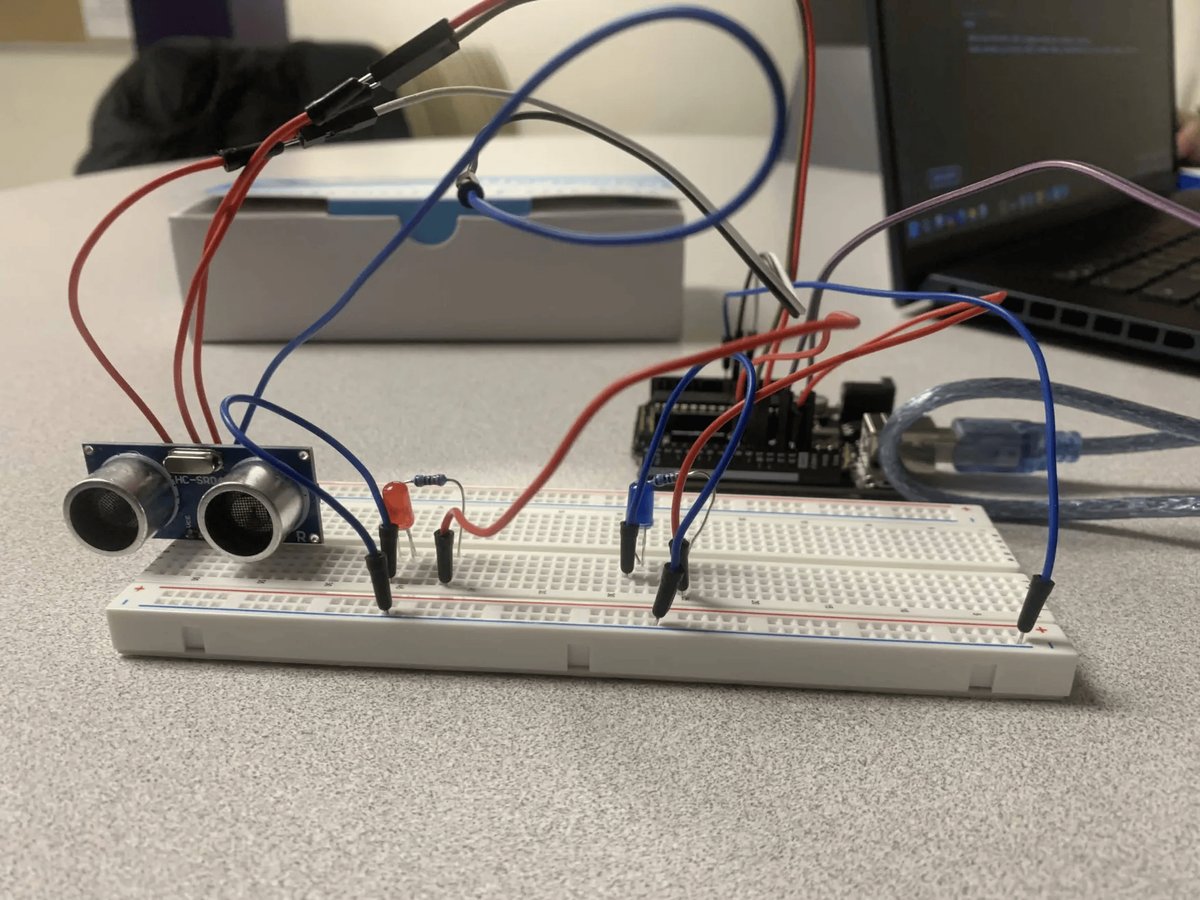
Built an ultrasonic sensor that detects screen proximity and responds with light and sound, then tested it with students during real study sessions.
The Result
A working prototype that nudges rather than scolds, after calibration work to stop false triggers and feedback tuning so students wouldn't unplug it.
My Contribution
Group of 5 in UX202 Maker Lab II. I worked on the sensor calibration, the feedback timing, and the user testing.
The Problem
- Extended screen time leads to poor posture habits that students don't notice until pain develops
- Students lack awareness of when they're sitting too close to their screens or slouching
- Visual notifications on screens are easily ignored during deep focus or flow states
- Existing ergonomic solutions don't provide real-time feedback or intervention
The Solution
- Ultrasonic sensors continuously monitor the distance between the user and their screen, detecting unhealthy proximity in real time
- Soft LED light cues activate when poor posture persists, without being disruptive to focus
- Gentle audio alerts add a second sensory layer so the cue isn't easy to miss or ignore
- Physical, multi-sensory feedback helps users build body awareness and healthier habits through gentle, somatic learning over time
Process
Research & Observation
Studied student study habits, ergonomic best practices, and how poor posture develops during extended screen use.
Sensor Integration
Programmed ultrasonic distance sensors to detect when users lean too close to their screens, triggering gentle interventions.
Physical Prototyping
Built an Arduino-powered prototype with LED lights and speakers to deliver multi-sensory feedback without being intrusive.
User Testing & Refinement
Tested with students during real study sessions, adjusting sensitivity, timing, and feedback intensity based on their reactions.
What the research told me
What testing with real students revealed.
Insight 01
Screen alerts fail during focus
Visual notifications on the screen are exactly what students tune out during deep work, so the cue had to come from outside the screen.
Insight 02
Tone matters more than detection
Early versions were too aggressive; students said they'd just unplug it. The correction had to feel like a nudge, not a scold.
Insight 03
False triggers kill trust
Early runs triggered warnings even with good posture, so sensor calibration became the central design problem.
Exploring the options
Grounded in somatic design thinking from the course.
The Approach
- Somatic design, drawing on Kristina Höök's work on designing with the body and Richard Shusterman's writing on body awareness
- A device that engages the body directly rather than adding another screen-based alert
What came out of it
A working Arduino prototype with ultrasonic distance sensing and LED/audio feedback, tested directly with students during real study sessions and refined based on how they actually reacted to it.
What I learned
The hardest part wasn't detecting bad posture. It was making the correction feel like a nudge instead of a scold. Early versions were too aggressive and students said they'd just unplug it. Dialing the sensor sensitivity and feedback timing down until it felt supportive rather than naggy was most of the real design work here.
Calibrating the ultrasonic sensor took longer than expected. Early test runs kept triggering the warning even when posture was fine, so getting the distance threshold right meant a lot of trial and error with the code, not just the hardware. The design leaned on somatic design thinking from the course (Kristina Höök's work on designing with the body, and Richard Shusterman's writing on body awareness). The goal was a device that engages the body directly rather than another screen-based alert.
When we shared it informally, classmates related to the problem immediately and liked the concept, but the honest feedback was that the buzzer could get annoying if it triggered too often, a real signal that the next iteration needed a gentler, less repetitive alert.